Polycarbonate Rotating Dome House: A Unique Space with a Changing View
Imagine relaxing inside a cozy dome while the view around you slowly changes. In the morning, you can enjoy the sunshine. Later, you can turn toward the garden, the lake or a beautiful sunset.
A polycarbonate rotating dome house brings a fresh idea to outdoor spaces. It combines a dome-style structure with a rotating system, creating a special place to relax, enjoy the view and spend time with family or guests.
For hotels, resorts, glamping sites and private gardens, this design offers more than a sheltered space. It can also become a memorable feature that attracts attention and gives visitors a reason to stay longer.
What Is a Polycarbonate Rotating Dome House?
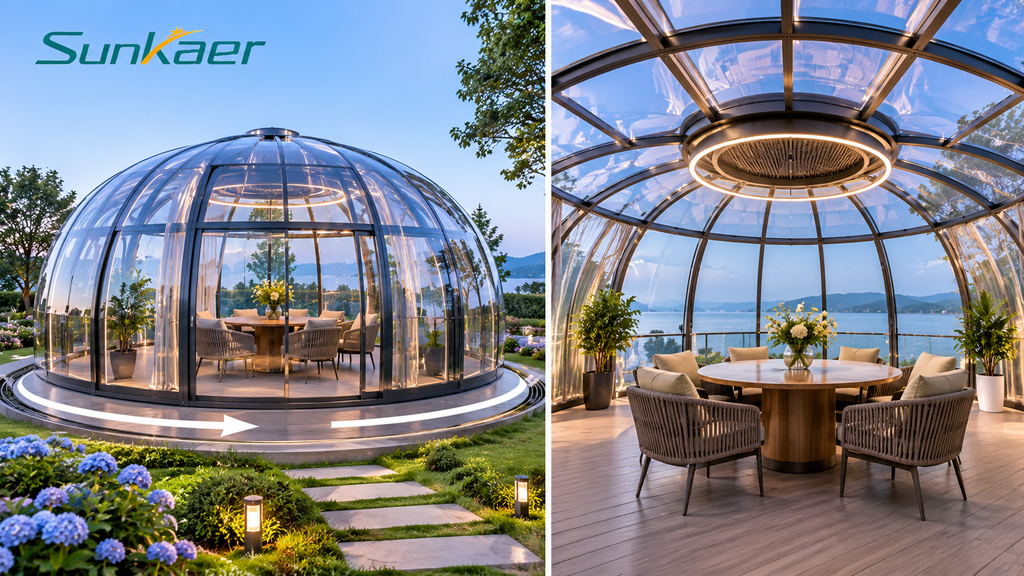
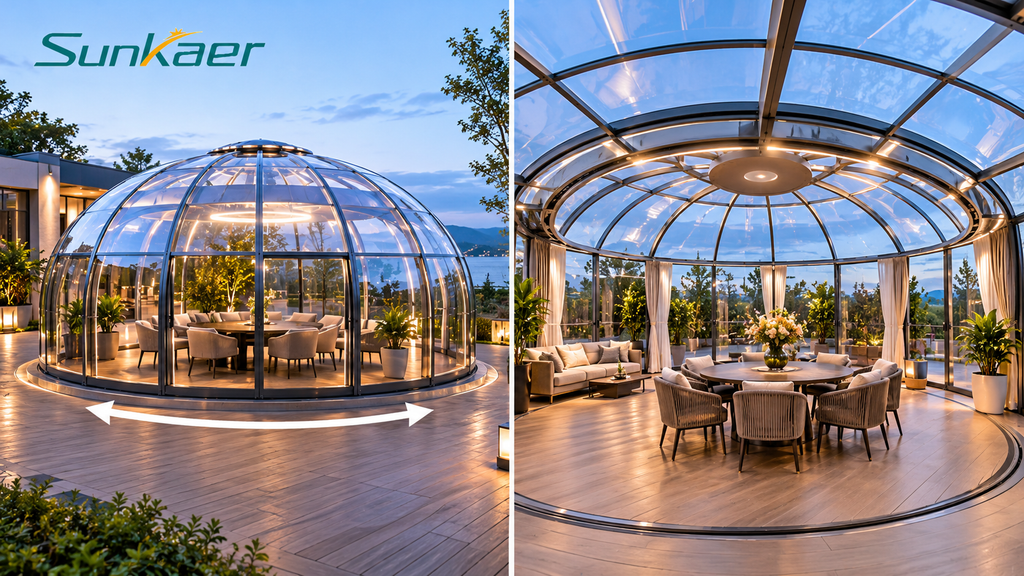
A polycarbonate rotating dome house is a dome-shaped structure made with a supporting frame and polycarbonate panels. It also features a rotating base or mechanism that allows the dome to change its viewing direction.
Unlike a fixed garden room, a rotating dome can offer a different view as its position changes. The exact rotation method, movement range and control system depend on the project design.
Meanwhile, the dome shape creates a distinctive look. Its curved appearance can fit naturally into gardens, hotel grounds, resort landscapes and other outdoor settings.
Why Choose a Polycarbonate Rotating Dome House?
A rotating dome house can make an outdoor area feel more special. Here are several reasons why property owners and hospitality businesses may consider this design.
1. Enjoy Different Views
A fixed structure always faces the same direction. However, a rotating dome can change its position to offer a new view.
For example, a resort may want guests to enjoy a lake view during the day and a sunset view in the evening. A rotating design can make that experience more flexible, depending on the site’s layout and rotation system.
2. Create a Memorable Guest Experience
Hotels and resorts need spaces that guests remember and want to share. A rotating dome can serve as a private lounge, a small dining room or a special relaxation area.
In addition, its unusual appearance can help a property stand out in photos and on social media. This makes it an interesting option for boutique hotels, glamping sites and destination resorts.
3. Let Natural Light Into the Space
Polycarbonate panels allow natural light to enter the dome. As a result, the interior can feel bright and connected to the surrounding landscape.
Polycarbonate is also lighter than many traditional glazing materials. The right panel type should match the project’s requirements for light transmission, impact resistance, UV protection and insulation.
4. Make Better Use of Outdoor Areas
A rotating dome can turn an open area into a more functional space. Property owners can use it as a garden retreat, a private lounge or an extra guest area.
For commercial projects, several domes can also create separate spaces across a larger outdoor area. Each one can offer guests a different view or experience.
Where Can You Use a Rotating Dome House?
The design works well in different settings. The best use depends on the available space, local conditions and the experience you want to create.
Rotating Dome House for Hotels and Resorts
Hotels and resorts can use rotating dome houses as private guest lounges, outdoor relaxation rooms or special dining spaces.
For example, a resort may place several domes beside a lake, near a swimming pool or across a landscaped garden. Guests can enjoy a more private setting while still taking in the surrounding views.
Rotating Dome for Glamping Sites
Glamping businesses often look for accommodation that feels different from a standard hotel room. A dome design can create a closer connection with nature.
What’s more, a rotating system may help guests adjust the viewing direction to suit the landscape. Before choosing this solution, the operator should consider privacy, shading, ventilation, access and the site’s weather conditions.
Rotating Dome House for Gardens and Private Properties
A rotating dome can also become a private retreat in a large garden or countryside property. Use it as a reading room, a place to enjoy afternoon tea or a quiet space to spend time with family.
With a suitable layout, the dome can become both a practical outdoor room and an attractive landscape feature.
Why Use Polycarbonate for a Dome Structure?
The material plays an important role in the look and performance of a dome house. Polycarbonate is a useful option for projects that need a balance of light transmission and relatively low structural weight.
Here are some points to consider:
- Natural light: Polycarbonate panels can let daylight into the interior. Different panel types offer different levels of light transmission.
- Lower weight: Polycarbonate is generally lighter than glass, which can help reduce the weight of the panel system.
- Impact resistance: Polycarbonate offers good impact resistance when the project uses a suitable grade and thickness.
- Design flexibility: It can be used in curved or segmented panel layouts, depending on the structure and fabrication method.
- UV protection: UV-protected options are available. Confirm the panel specification before ordering.
However, not every polycarbonate panel has the same performance. Panel thickness, structure, coating and installation details all matter. Therefore, choose materials according to the project’s climate and intended use.
Important Things to Consider Before Installation
A rotating dome house combines an enclosure with a moving system. Therefore, good planning is essential.
Check the installation site first. Measure the available area and review the ground conditions. The site must provide enough room for the structure and its movement.
Plan the rotating mechanism. The rotation range, drive method and control system should match the intended use. Also consider access for inspection and future maintenance.
Review local weather conditions. Wind and snow loads vary by location. A qualified professional should check the structure, foundation and connections against local requirements.
Think about comfort. Ventilation, shading, condensation control, doors and electrical services all affect the user experience. For commercial projects, also consider how staff and guests will enter and use the space.
Check local building rules. Permit and safety requirements differ from one region to another. Confirm them before starting construction.
Custom Polycarbonate Rotating Dome House by Sunkaer
Every project has different needs. A glamping site may focus on guest views and privacy, while a hotel may need several domes that fit its outdoor design.
Sunkaer works with customers on custom outdoor structure projects. The design process can take into account the site layout, dome size, panel selection, supporting structure and rotating system requirements.
To start a project discussion, prepare a few details:
- Photos or videos of the installation site.
- The required diameter, height and available installation area.
- Your intended use, such as a resort lounge, glamping space or private garden room.
- Your preferred design and any local weather or site requirements.
With this information, the team can review the project and discuss a suitable design direction.
Looking for a custom polycarbonate rotating dome house? Contact Sunkaer to discuss your project and explore the possibilities.
Frequently Asked Questions
Can a polycarbonate rotating dome house rotate?
Yes. A rotating dome house uses a designed rotating base or mechanism to change its viewing direction. Its movement range and control method depend on the specific project.
Can a rotating dome house be used by hotels and resorts?
Yes. It can serve as a guest lounge, private dining space or outdoor relaxation room. Hotels and resorts can also use multiple domes to create distinctive areas across their property.
Is polycarbonate suitable for an outdoor dome house?
Polycarbonate can be suitable for outdoor dome structures when the project uses the right panel type, supporting frame and installation details. UV protection, impact resistance and local weather requirements should all be considered.
Can the dome house be customized?
The size, appearance, panel selection and supporting structure can be planned around the project. The rotating mechanism should also be selected according to the intended use and site conditions.
What information is needed for a quotation?
Start with site photos, the available installation dimensions and your intended use. These details help the team understand the project and discuss a suitable solution.