Polycarbonate Retractable Pool Cover or Pool House? One Flexible Solution
A swimming pool should be more than a beautiful feature in your backyard. It should be a space you can enjoy in different weather conditions, throughout more of the year.
However, an uncovered pool can quickly become difficult to maintain when leaves, rain, wind and changing temperatures affect the water. A traditional pool cover may help protect the water, but it does not necessarily create a comfortable space around the pool.
This is where a polycarbonate retractable pool cover offers a different approach.
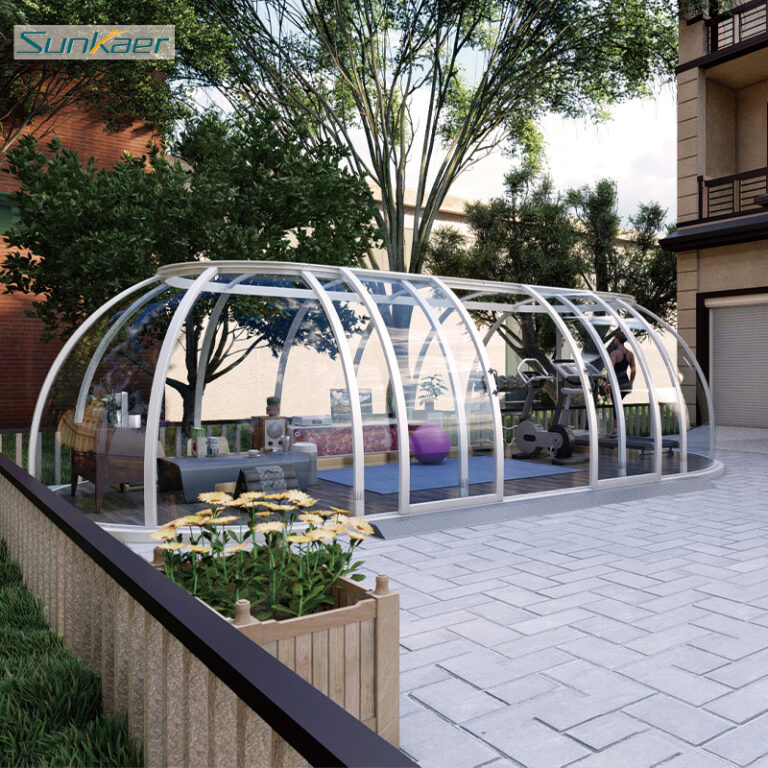
By combining solid polycarbonate panels with an aluminum structure and a sliding opening system, a retractable pool enclosure can do more than cover the water. Depending on its height and design, it can also transform the pool area into an enclosed space for swimming, relaxing and spending time with family.
At Sunkaer, we offer customized retractable enclosure solutions for swimming pools and outdoor living spaces. In this guide, we explore the differences between a retractable pool cover and a pool house, the advantages of a flexible enclosure, and what to consider before choosing a design for your property.
1. What Is a Polycarbonate Retractable Pool Cover?
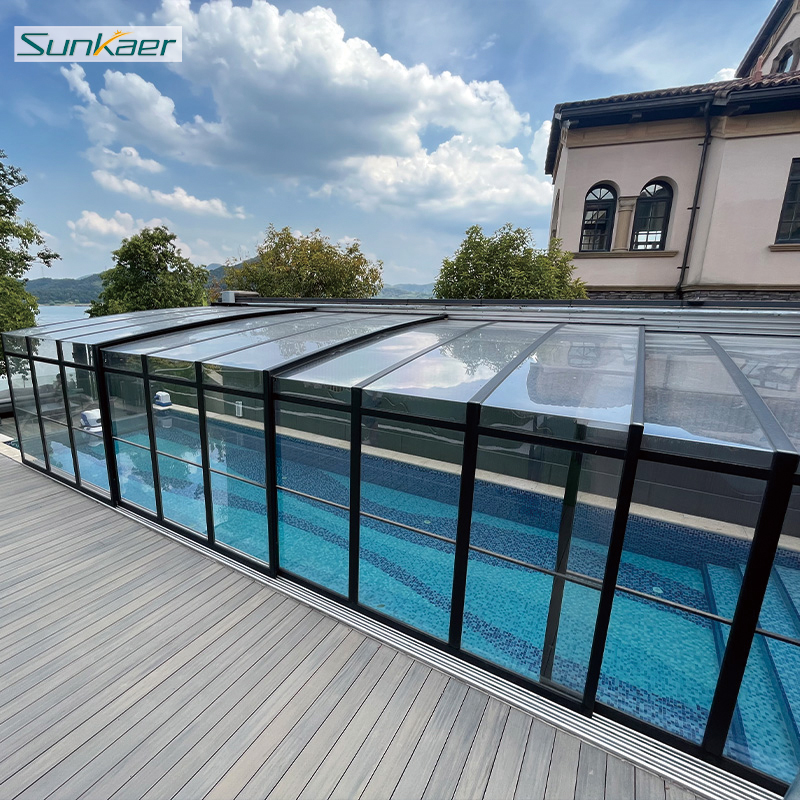
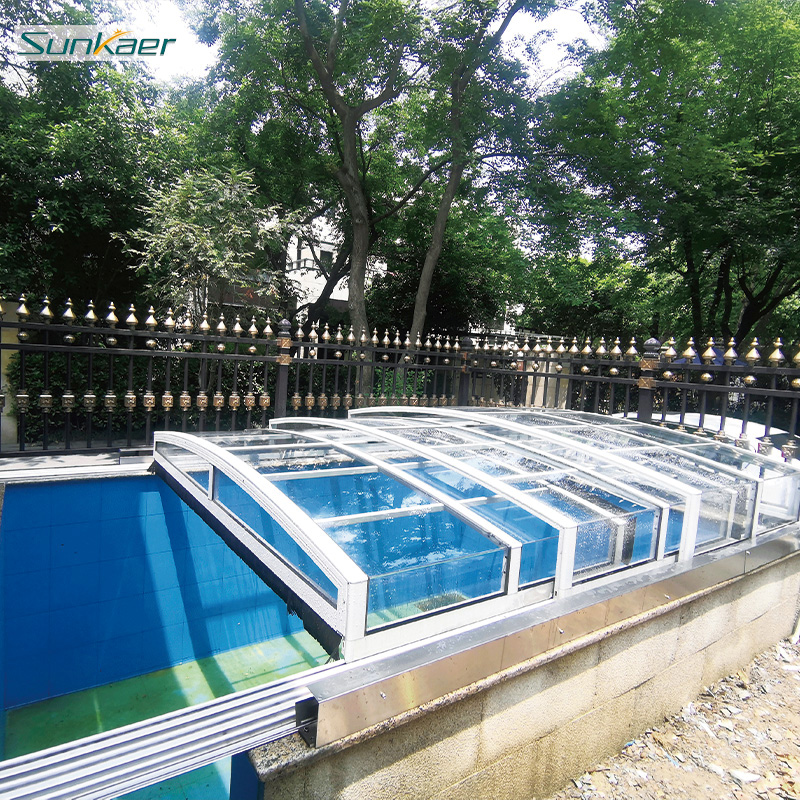
A polycarbonate retractable pool cover is a movable enclosure designed to cover a swimming pool while allowing the structure to open when an outdoor swimming experience is preferred.
Unlike a conventional fabric cover that must be removed and stored, a retractable system uses sliding sections that move along tracks. The pool can remain enclosed when protection is needed and be exposed to the open air when conditions are suitable.
A typical system consists of:
- Solid polycarbonate panels: Allow natural light to enter while forming a physical enclosure around the pool.
- An aluminum structure: Supports the panels and provides the framework for the retractable system.
- A sliding mechanism: Allows the enclosure sections to move between open and closed positions.
- Customized dimensions and configurations: Help the enclosure fit the pool layout and available installation space.
The final design depends on the pool’s dimensions, the desired enclosure height, the opening direction and the conditions at the installation site.
Explore the Sunkaer Polycarbonate Pool Cover to learn more about available configurations.
2. Pool Cover vs. Pool House: What Is the Difference?
Although the terms are sometimes used interchangeably, a retractable pool cover and a retractable pool house can serve different priorities.
Retractable Pool Cover: Focus on the Water
For homeowners who mainly want to protect their swimming pool when it is not in use, a lower-profile retractable cover may be a suitable option.
Its primary purposes can include helping keep leaves and debris out of the water, reducing exposure to the elements and making the pool easier to manage between swimming sessions.
Depending on the model, the cover may provide limited clearance or allow swimming beneath the closed enclosure. Not every low-profile design is intended for people to walk around or swim underneath, so usable clearance should be confirmed before purchasing.
This approach is worth considering when maintaining the garden’s appearance and minimizing the visual impact of the enclosure are important priorities.
Retractable Pool House: Focus on the Entire Space
A retractable pool house places greater emphasis on the experience of using the pool area.
A taller enclosure can create space for swimming, walking around the pool, relaxing beside the water or arranging suitable outdoor furniture. When the enclosure is closed, the area becomes more sheltered. When it opens, the space can reconnect with the garden and fresh air.
This makes a retractable pool house particularly attractive for homeowners who want to combine pool protection with a more versatile outdoor living environment.
For larger projects, the surrounding layout, ventilation, access and furniture arrangements should be considered alongside the pool dimensions.
One Enclosure, Different Possibilities
The main difference is not simply the material. It is how the entire space will be used.
A lower enclosure may prioritize compact protection, while a taller retractable pool house can prioritize usable space around the pool. The appropriate solution depends on your lifestyle, pool layout, budget and local building requirements.
3. Why Choose a Retractable Design Instead of a Fixed Enclosure?
A fixed enclosure provides a permanent covered space, while a retractable enclosure allows the pool area to change according to weather and usage needs.
Enjoy Open-Air Swimming When the Weather Is Right
On a warm, sunny day, an open pool is often the most enjoyable option.
A retractable design allows the enclosure to move back so the swimming area can return to an open-air environment. When rain, wind or cooler conditions arrive, the enclosure can be closed again, subject to the system’s operating limits.
This flexibility is especially useful for homeowners who do not want a permanent roof over their swimming pool.
Make the Pool Area More Versatile
A suitable pool house can provide a more defined space for relaxing beside the water, spending time with family or enjoying a quieter afternoon outdoors.
For properties with larger pools, the enclosure may also help connect the swimming area with an adjacent patio or garden. The exact layout will depend on the configuration and available space.
Maintain Natural Light
Solid polycarbonate panels allow natural light to enter the enclosure, helping maintain a bright environment around the pool.
Compared with some opaque roofing materials, transparent or translucent panels can preserve more of the visual connection with the surrounding landscape.
The actual light transmission depends on the panel specification, tint and design.
Adapt to Different Weather Conditions
A retractable enclosure can help shield the pool area from rain and wind when closed. It can also reduce the amount of leaves and other airborne debris entering the pool.
However, its suitability for severe weather depends on the structural design, anchoring, span, panel specification and local wind or snow loads. A retractable enclosure should be selected for the actual site rather than assumed suitable for every climate.
4. Polycarbonate and Aluminum: A Practical Material Combination
The material combination is one of the most important considerations when choosing a retractable swimming pool enclosure.
Solid Polycarbonate Panels
Polycarbonate is widely used in outdoor structures because it combines relatively low weight with high impact resistance.
For a retractable pool cover, this can make the enclosure panels easier to handle than comparable glass panels while helping maintain a light and visually open appearance.
Natural light can pass through the panels, while the enclosure provides a physical barrier against many outdoor contaminants.
For poolside applications, the appropriate panel specification should also be considered in relation to UV exposure, cleaning methods, humidity and temperature fluctuations.
Aluminum Framework
An aluminum framework supports the panels and the sliding sections of the enclosure.
Aluminum is valued for its balance of strength and weight, as well as its resistance to corrosion when appropriately specified and maintained. In a retractable structure, the frame, joints, tracks and supporting connections all contribute to smooth operation and long-term reliability.
Pool environments deserve particular attention because moisture and pool chemicals can affect some materials and components.
Sunkaer Material Warranty
Sunkaer lists a 10-year warranty against aging and yellowing for its polycarbonate sheets and a 30-year warranty against rusting and deformation for its aluminum structure.
The applicable coverage, exclusions and conditions should be confirmed in the written warranty for the selected product.
5. How to Choose the Right Pool Cover or Pool House Design
The best enclosure starts with a clear understanding of how the swimming pool will be used.
Step 1: Decide How You Want to Use the Space
Ask yourself whether you mainly need a protective cover or want a sheltered area where people can swim and move around while the enclosure is closed.
If the priority is protecting the pool while keeping the surrounding garden visually open, a lower profile may be worth considering.
If you want to create a more usable poolside environment, explore a taller pool house configuration.
Step 2: Measure the Pool and Surrounding Area
Accurate dimensions are essential for a customized solution.
Measure the pool length and width, and record the available space around it. Photos of the full pool area, surrounding walls, paving, nearby buildings and access routes will help the supplier understand the site.
Also consider where the enclosure will move when opened. The required retraction space can affect the layout and installation plan.
Step 3: Consider Your Local Climate
Weather conditions influence the design requirements of a pool enclosure.
Projects in areas with heavy snowfall, strong winds, intense sun or large temperature fluctuations need appropriate structural and material specifications.
Before placing an order, confirm the relevant design loads, anchoring method, drainage arrangements and installation requirements with the supplier and qualified local professionals.
Step 4: Select the Opening and Operating Options
Different projects may call for different opening directions and operating arrangements.
Consider how frequently you expect to open the enclosure, who will operate it, and whether manual or motorized operation is available for the chosen model.
Also check track clearance, access points and any practical operating restrictions before confirming the design.
Step 5: Plan for Ventilation and Comfort
Closing a transparent enclosure can lead to heat buildup in sunny weather. Condensation can also occur when humidity and surface temperatures differ.
Ventilation, shading, heating or cooling may therefore need to be evaluated, especially if the pool house will be used for extended periods or in a commercial setting.
A retractable enclosure can improve weather flexibility, but it should not automatically be treated as a fully conditioned indoor room.
6. Is a Polycarbonate Retractable Pool House Worth the Investment?
A retractable pool house can be worth considering when a homeowner wants more than basic pool protection.
Its value comes from combining several potential benefits in one structure: a physical enclosure for the pool, flexibility between open and covered configurations, natural light and a more usable poolside environment.
The overall investment depends on more than the initial product price. Dimensions, enclosure height, panel specifications, customization, accessories, transportation, installation and local site preparation can all affect the final budget.
For this reason, comparing quotations is most useful when each supplier is pricing a similar design, specification and scope of work.
For a customized assessment, prepare the approximate pool dimensions, installation location, site photos and your preferred enclosure height. Explain whether your priority is pool protection, swimming beneath the closed enclosure or creating a more complete pool house.
This information helps the manufacturer recommend a configuration that is better aligned with your actual needs.
7. Why Choose Sunkaer for Your Retractable Pool Enclosure?
Sunkaer specializes in customized outdoor enclosure and sunshade solutions, combining aluminum structures with polycarbonate panels for a range of residential and commercial applications.
Our retractable enclosure range includes solutions for swimming pools, sunrooms, terraces and other outdoor spaces. Design details can be customized to suit the dimensions, layout and intended use of each project.
We understand that no two swimming pools are exactly alike. A practical solution requires more than selecting a standard product size: it involves considering the pool dimensions, opening space, local weather, installation conditions and the owner’s preferred way of using the area.
Whether you are upgrading a family swimming pool or planning a pool enclosure for a hospitality project, Sunkaer can help you explore the available design options.
Ready to transform your swimming pool?
Visit the Sunkaer Polycarbonate Pool Cover product page to explore our retractable enclosure solution.
Send us your pool dimensions, site photos, project location and preferred design to request a customized quotation.
A more flexible swimming experience starts with the right enclosure for your space.
Frequently Asked Questions
What is a polycarbonate retractable pool cover?
It is a movable pool enclosure that typically combines polycarbonate panels, an aluminum framework and sliding sections. Depending on the design, it can cover the water while allowing the pool to be opened to the outdoors when required.
What is the difference between a pool cover and a pool house?
A pool cover primarily focuses on protecting the swimming pool. A taller pool house enclosure can also create usable space around the pool for swimming, walking or relaxing when the structure is closed. The actual clearance and permitted uses depend on the selected design.
Can I swim while the retractable pool cover is closed?
That depends on the enclosure’s internal height and configuration. Some low-profile covers are not designed for swimming underneath, while suitable taller designs can provide the required clearance. Always confirm the usable dimensions of the exact model.
Does a retractable pool enclosure help keep the pool clean?
It can help reduce the amount of leaves, dust and other debris entering the pool while the enclosure is closed. The actual maintenance benefits depend on the environment, enclosure design and how the pool is used.
Can a polycarbonate pool house be customized?
Sunkaer offers customization options for dimensions, colors, panel types and opening direction. Final options depend on the selected model and project requirements.
How do I get a quotation for a custom retractable pool cover?
Provide your project location, pool dimensions, site photos, preferred enclosure height and intended use. Additional information about the surrounding space and local weather will help the supplier evaluate the project and prepare a more relevant quotation.